Overview
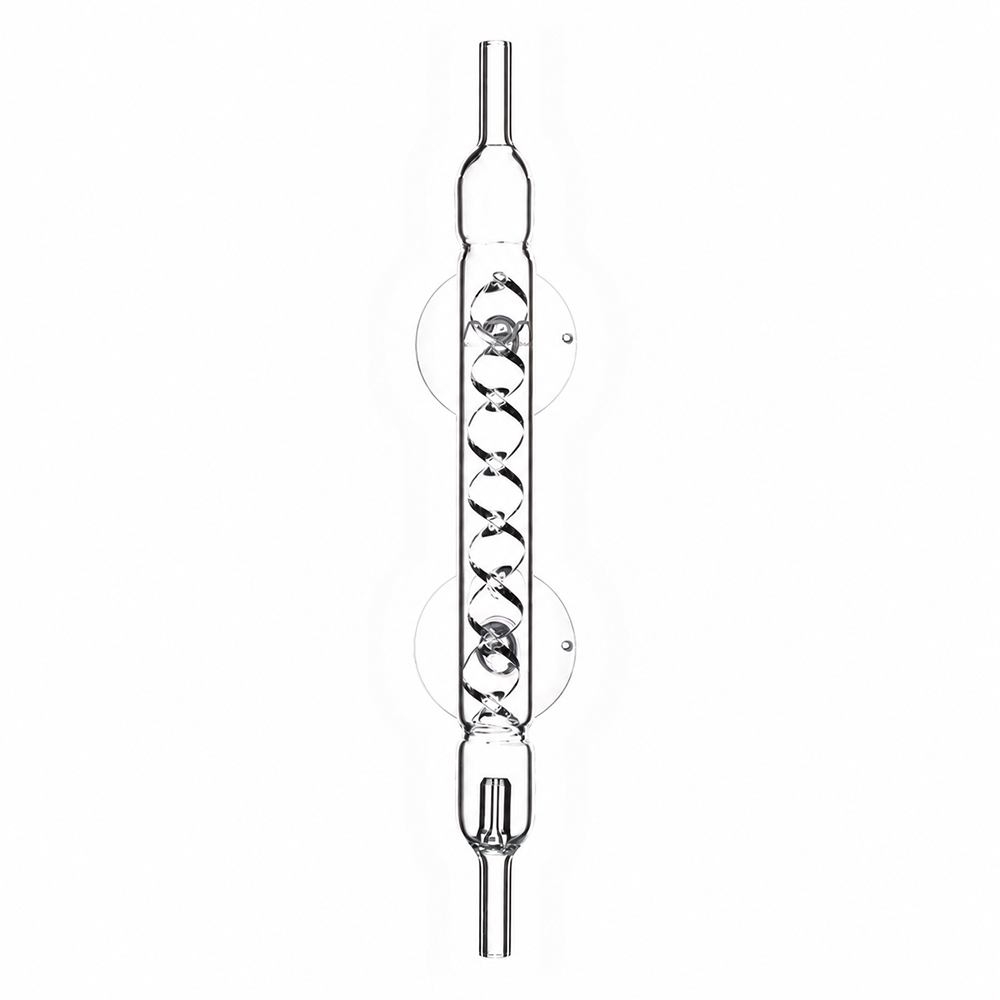
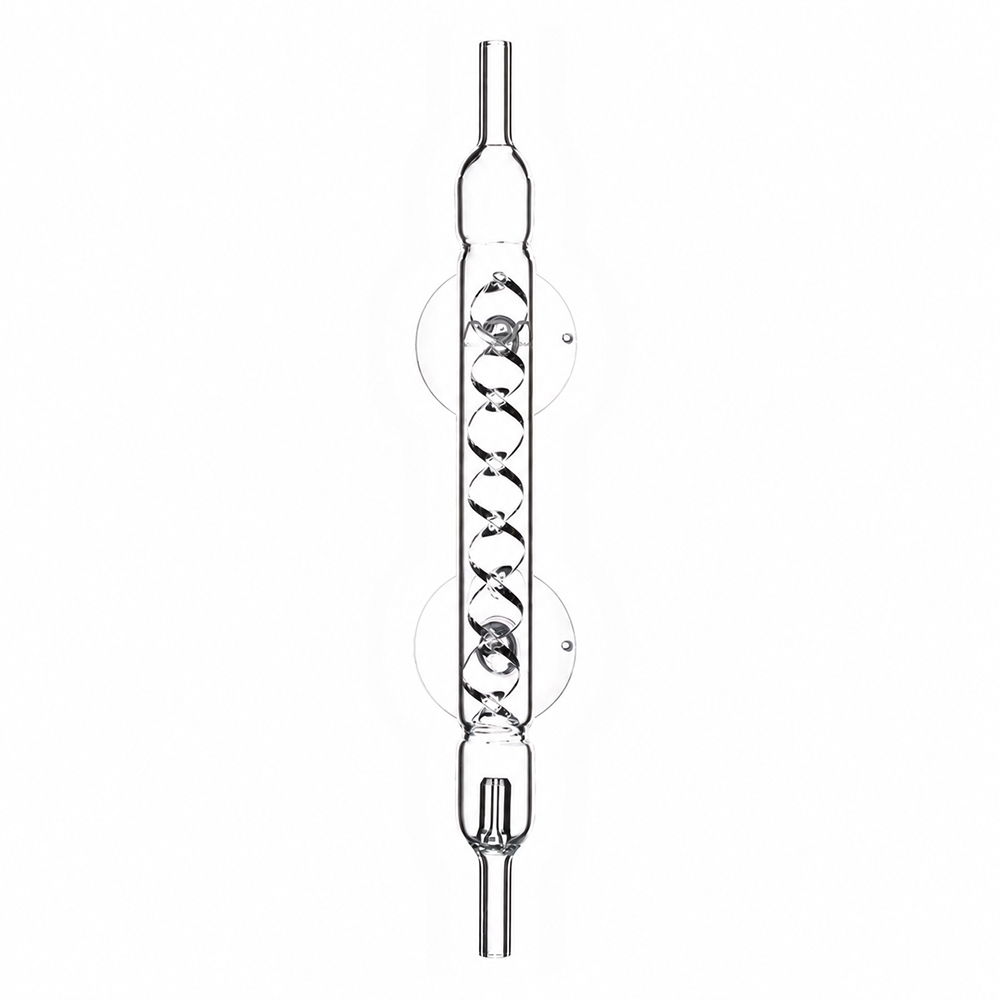
The LGND Infinity™ Bubble Counter is a high-quality glass bubble counter designed for use with the LGND Rhapsody™ CO₂ Glass Large and LGND Bloom™ Glass diffusers.
Its distinctive spiral structure keeps the rising CO₂ bubbles clearly visible, making the supply rate easier to monitor even at the higher flow rates commonly required by larger aquariums. The elegant glass design combines reliable functionality with a refined appearance that complements the aquarium display.
A separate non-return valve is included to help protect the CO₂ equipment against water backflow.
Directions
Filling and Installation
Switch off the CO₂ supply and release any remaining pressure from the system.
Fill the LGND Infinity™ Bubble Counter with LGND Bubble Counter Liquid or clean water. Do not overfill it.
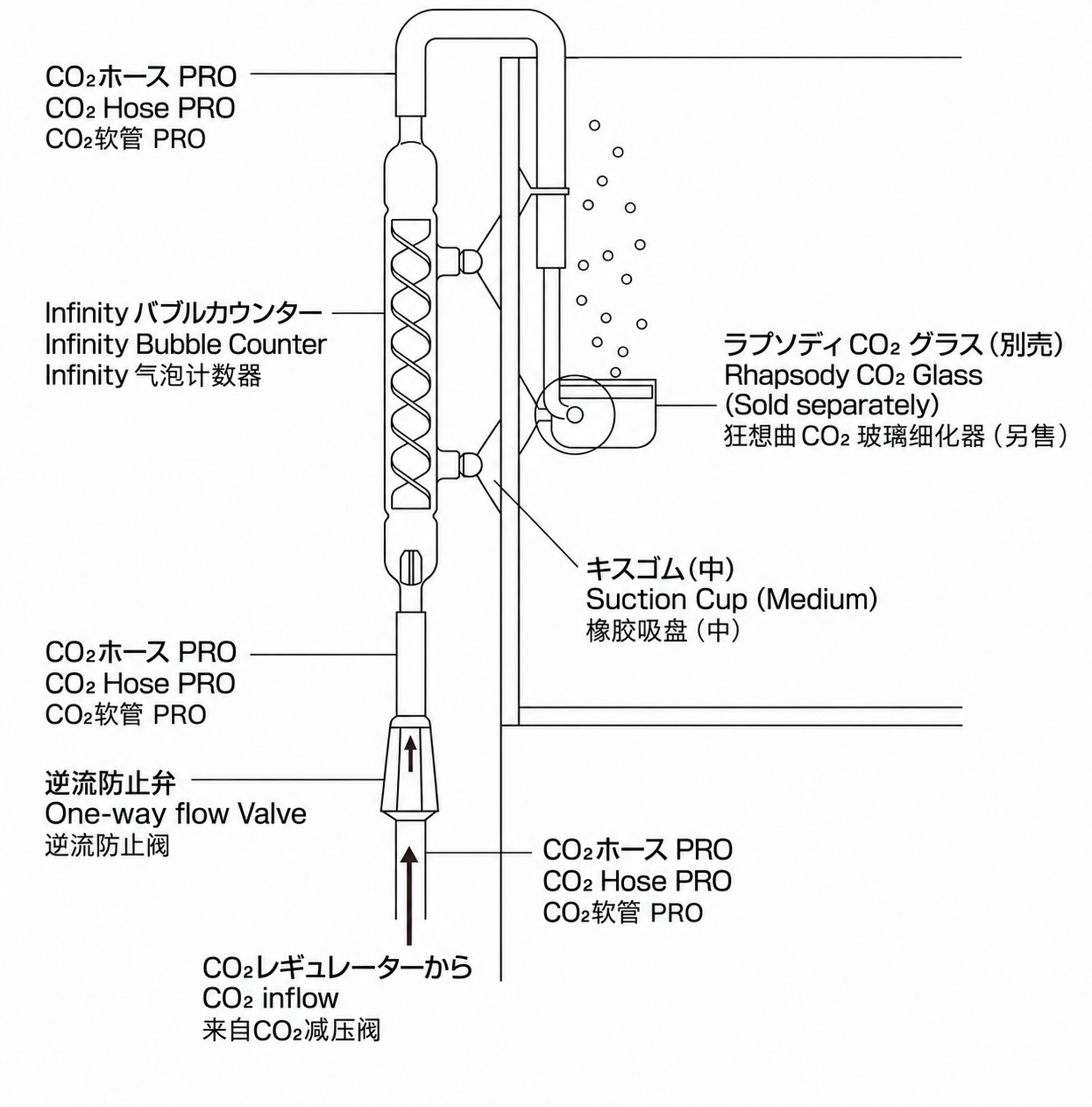
Install the bubble counter vertically, with the inlet positioned at the bottom and the outlet at the top.
Connect the CO₂ supply tubing to the inlet side of the supplied non-return valve. Connect the outlet of the non-return valve to the lower inlet of the bubble counter. Position the valve as close to the bubble counter as practical and ensure that its flow arrow points towards the bubble counter.
Connect the upper outlet of the bubble counter to the CO₂ diffuser or reactor. Restore the CO₂ supply gradually and check all connections for leaks. Adjust the CO₂ flow while observing the bubbles rising through the spiral chamber.
Installation Order
CO₂ cylinder → Pressure regulator → Solenoid valve, if fitted → Supplied non-return valve → LGND Infinity™ Bubble Counter → CO₂ diffuser or reactor
Use suitable CO₂-resistant tubing throughout the pressurised section of the system. When connecting tubing to glass fittings, soften the end of the tubing in warm water before installation. Push it on gently without twisting or applying sideways pressure. Standard silicone airline is not pressure-resistant and must not be used between the pressure regulator and the bubble counter.
Dimensions
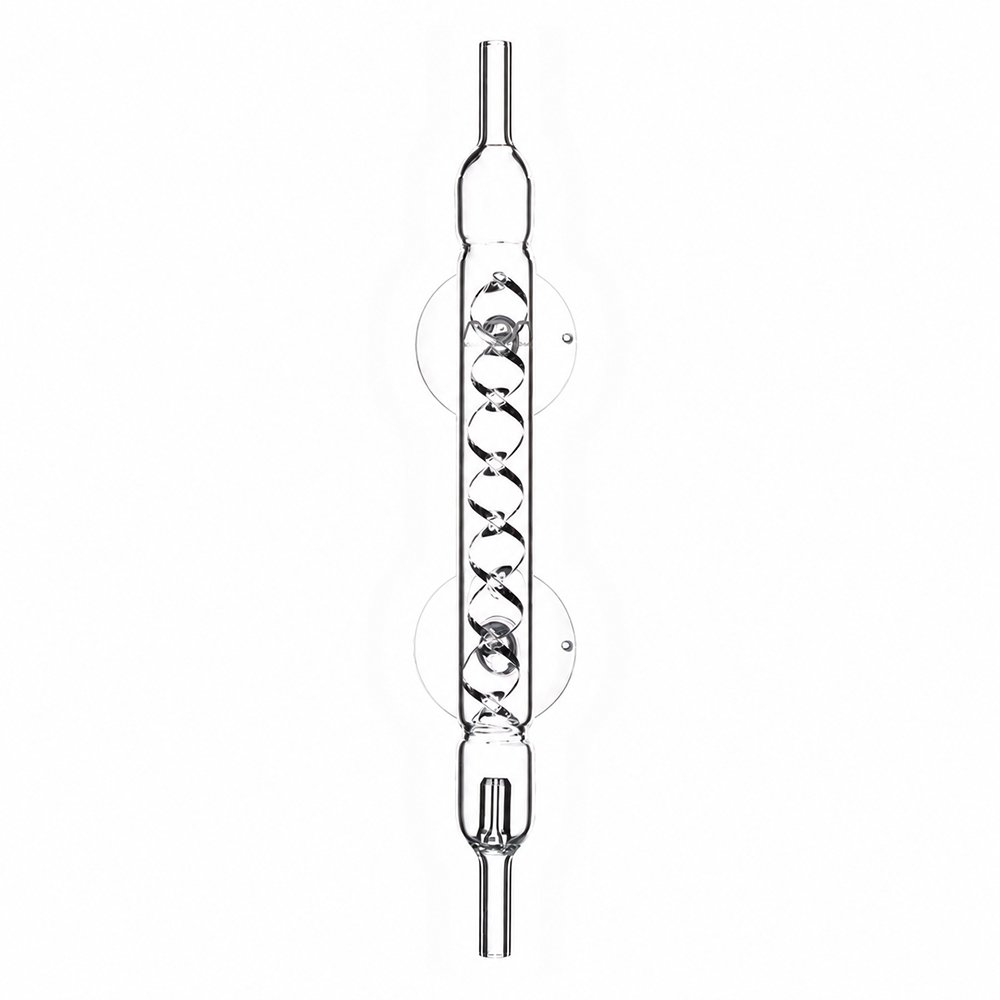
| Length | 173 mm |
| Diameter | 18 mm |
| Width with suction cup | 37 mm |
| Fits hose | 5 mm – 4/6 mm hose |
FAQ
What is the LGND Infinity™ Bubble Counter used for?
It allows the aquarium's CO₂ supply rate to be monitored by observing and counting the bubbles passing through its spiral chamber.
Which LGND diffusers is it compatible with?
It is designed to complement the LGND Rhapsody™ CO₂ Glass Large and LGND Bloom™ Glass diffusers. It may also be used with other aquarium CO₂ diffusers or reactors when suitable tubing and connections are used.
What should I use to fill the bubble counter?
LGND Bubble Counter Liquid is recommended for clear and consistent long-term visibility. Clean water may also be used but can evaporate more quickly and may require more frequent refilling.
How much liquid should I add?
Add enough liquid for the bubbles to travel visibly through the spiral chamber. Do not fill the bubble counter completely, as an air space is required for the bubbles to form and remain visible.
Which way should the bubble counter be installed?
Install it vertically, with the CO₂ inlet at the bottom and the outlet leading to the diffuser or reactor at the top.
Is a non-return valve included?
Yes. A separate non-return valve is supplied and should be installed immediately before the lower inlet of the bubble counter, with the flow arrow pointing towards it.
Can standard silicone airline be used?
Standard silicone airline is not suitable for the pressurised connection from the regulator. Use dedicated CO₂-resistant tubing. A short section of suitable soft tubing may be used at a glass connection only when it is compatible with the operating pressure.
How many bubbles per second should I use?
There is no universal bubble rate because the required amount depends on aquarium volume, plant density, water circulation, surface agitation and diffuser efficiency. Begin with a low rate, increase it gradually and monitor the aquarium with a reliable CO₂ indicator.
What should I check if no bubbles appear?
Check that the CO₂ cylinder is open, the regulator is adjusted correctly, the solenoid valve is operating, the non-return valve faces the correct direction and all tubing connections are airtight. A blocked diffuser may also require additional working pressure or cleaning.
How should the bubble counter be cleaned?
Switch off the CO₂ supply, release the pressure and carefully disconnect the tubing. Rinse the bubble counter with lukewarm water. For mineral deposits, use a suitable aquarium glassware cleaner, then rinse thoroughly before reinstalling. Do not use abrasive tools or force objects inside the glass chamber.
Safety
- This product is intended exclusively for monitoring CO₂ supplied to planted aquariums.
- Always switch off the CO₂ supply and release the system pressure before installation, removal, cleaning or maintenance.
- Glass is fragile. Handle the bubble counter carefully and do not use it if it is cracked, chipped or otherwise damaged.
- Never force, twist or bend tubing while it is attached to the glass connections.
- Always install the bubble counter vertically and secure it where it cannot be struck or pulled by the tubing.
- Use only suitable pressure-resistant CO₂ tubing on the pressurised side of the system.
- Install the supplied non-return valve in the correct flow direction to help prevent aquarium water from travelling back towards the regulator.
- Check all tubing and connections for leaks before leaving the system operating unattended.
- Keep the product away from children and pets.
- Excessive CO₂ can endanger aquarium livestock. Increase the CO₂ supply gradually and monitor fish, shrimp and other inhabitants carefully.
- If fish show signs of distress, rapid breathing or remain near the water surface, stop the CO₂ supply immediately and increase aeration.